Sint Maarten Flag Meaning
Horizontal tricolor with coat of arms featuring the courthouse, yellow-sage flower, and motto 'Semper Progrediens' (Always Progressing).
- Continent
- North America
- Adopted
- 1985
- Ratio
- 2:3
- Colors
- red, white, blue
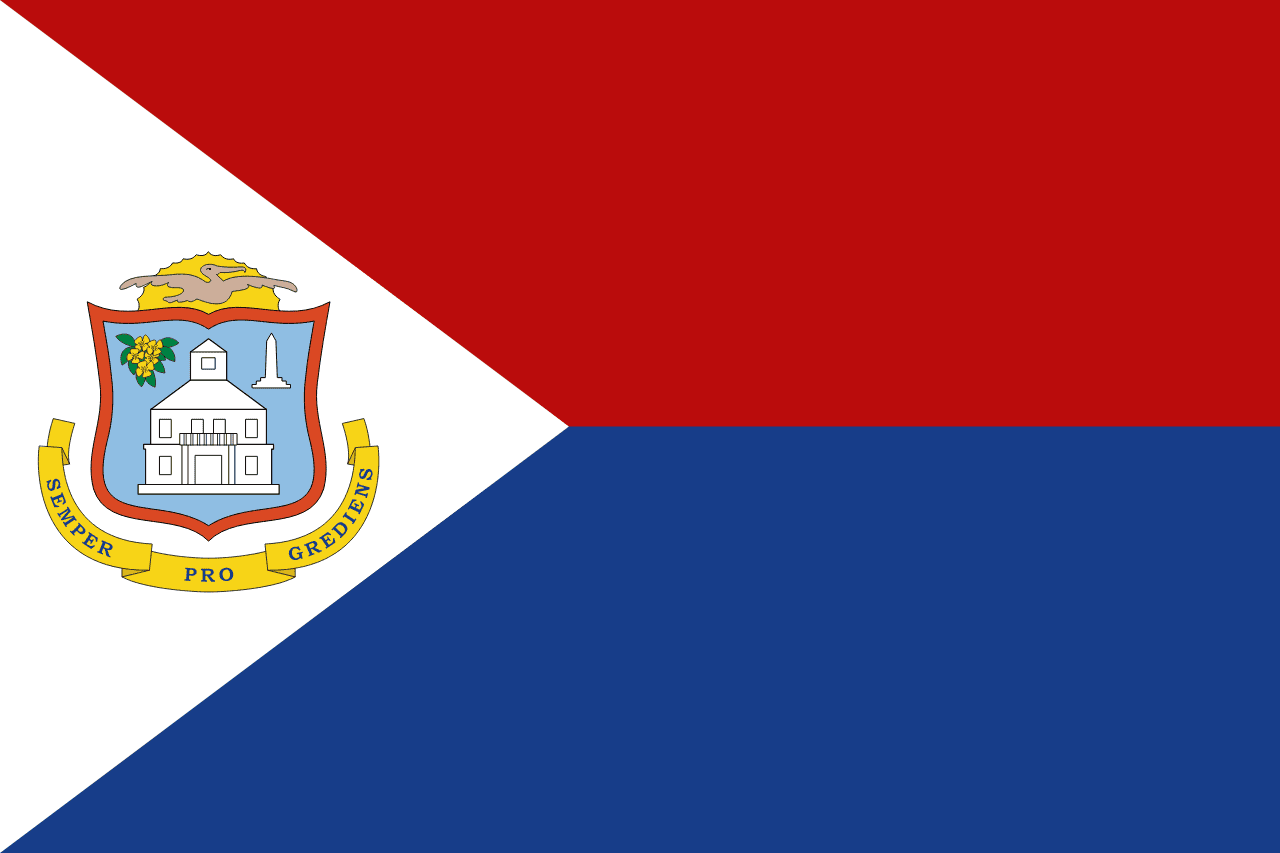
Symbolism
- Red Stripe
- Represents courage, determination, and the strength of the Sint Maarten people in building their nation and overcoming challenges.
- White Stripe
- Symbolizes peace, hope, and the harmonious coexistence of the diverse cultures that make up Sint Maarten's multicultural society.
- Blue Stripe
- Represents the Caribbean Sea surrounding the island, the sky above, and Sint Maarten's connection to the Kingdom of the Netherlands.
- Courthouse on Coat of Arms
- Symbolizes justice, law and order, and Sint Maarten's commitment to democratic governance and the rule of law.
- Yellow-Sage Flower
- The national flower represents the island's natural beauty, resilience, and the ability to flourish in the Caribbean environment.
- Motto 'Semper Progrediens'
- Latin for 'Always Progressing,' reflecting Sint Maarten's continuous development and forward-looking spirit as a young nation.
History
- 1648: Treaty of Concordia divided the island between France and the Dutch Republic, creating the world's smallest landmass shared by two sovereign nations.
- 1816-1954: Sint Maarten was part of the Dutch colony of Curaçao and Dependencies, later the Netherlands Antilles, administered from Willemstad.
- 1985: The current flag was adopted as Sint Maarten began developing its distinct identity within the Netherlands Antilles federation.
- October 10, 2010: Sint Maarten became an autonomous constituent country within the Kingdom of the Netherlands following the dissolution of the Netherlands Antilles.
- 2017: Hurricane Irma devastated the island, leading to reconstruction efforts and international cooperation that strengthened national identity.
Trivia
- Sint Maarten shares the island with French Saint-Martin, making it the smallest landmass in the world divided between two countries.
- The island has no border controls between the Dutch and French sides - you can walk freely between two different countries.
- Princess Juliana International Airport is famous for its beach approach, where planes fly extremely low over Maho Beach before landing.
- Sint Maarten uses both the US dollar and the Netherlands Antillean guilder, reflecting its complex economic relationships.
- The island is only 37 square kilometers (14 square miles), with the Dutch side occupying the southern 34 square kilometers.
- Sint Maarten has one of the highest population densities in the Caribbean, with about 40,000 residents in a very small area.
- The border between Dutch and French sides is marked by simple monuments and signs, not fences or checkpoints.
- Tourism is the island's main economy, with cruise ships bringing hundreds of thousands of visitors annually.
- Hurricane Irma in 2017 destroyed 95% of the island's buildings, making it one of the most devastating natural disasters in Caribbean history.
- The island celebrates two national days: Kingdom Day (April 27) with the Netherlands and Concordia Day (March 23) commemorating the 1648 treaty.
- Sint Maarten's carnival is one of the Caribbean's largest, featuring elaborate costumes, calypso music, and cultural celebrations lasting several weeks.
Related Countries
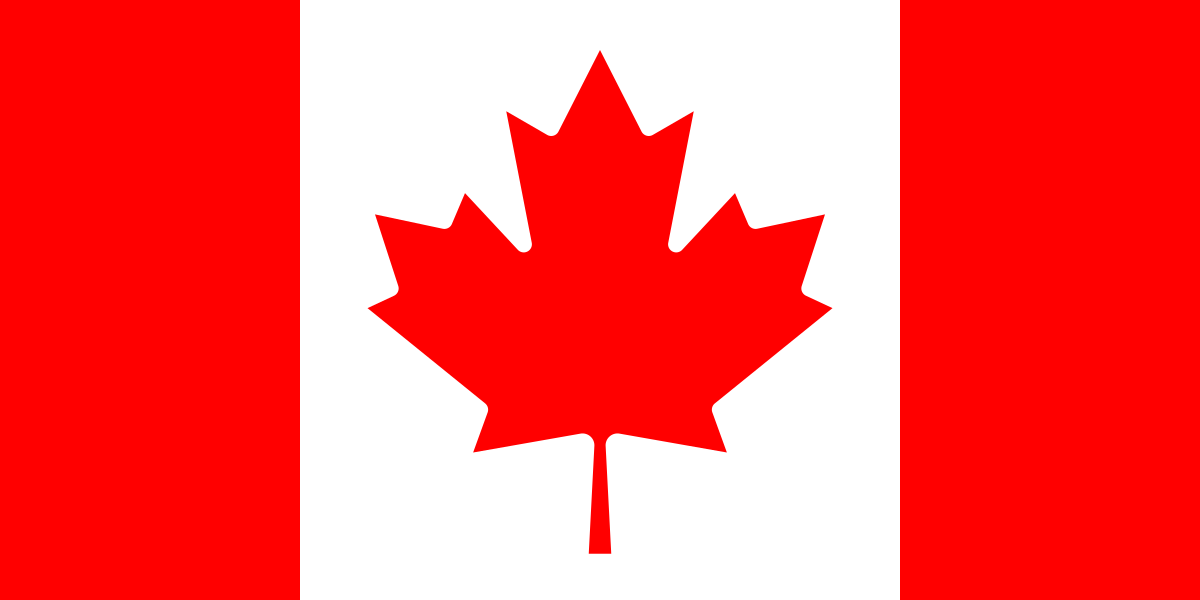
Canada
North America
The Maple Leaf - a red stylized maple leaf centered on a white square between two red vertical bands, representing Canada's natural heritage and unity from coast to coast.
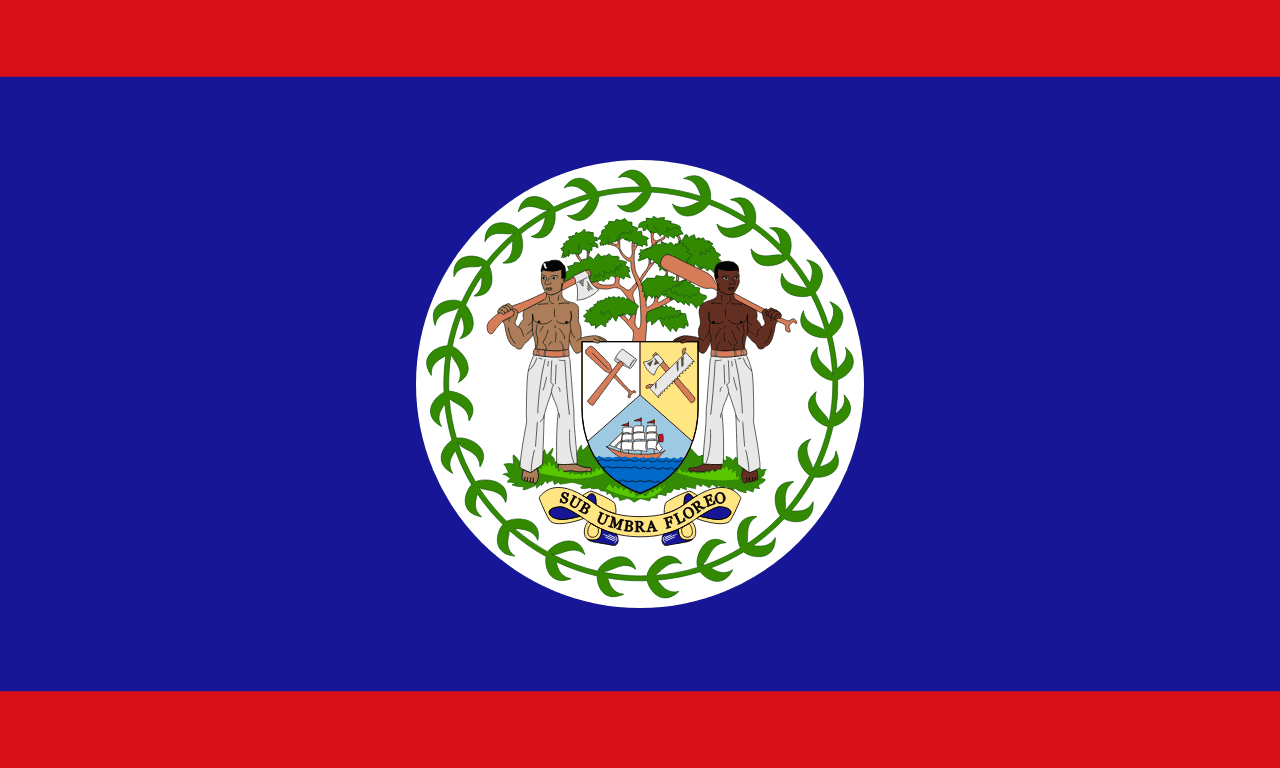
Belize
North America
A blue field with red stripes along the top and bottom edges and the national coat of arms in a white circle at the center, representing the ruling People's United Party, the opposition United Democratic Party, and the peace that unites them, making it the only national flag to feature human figures.
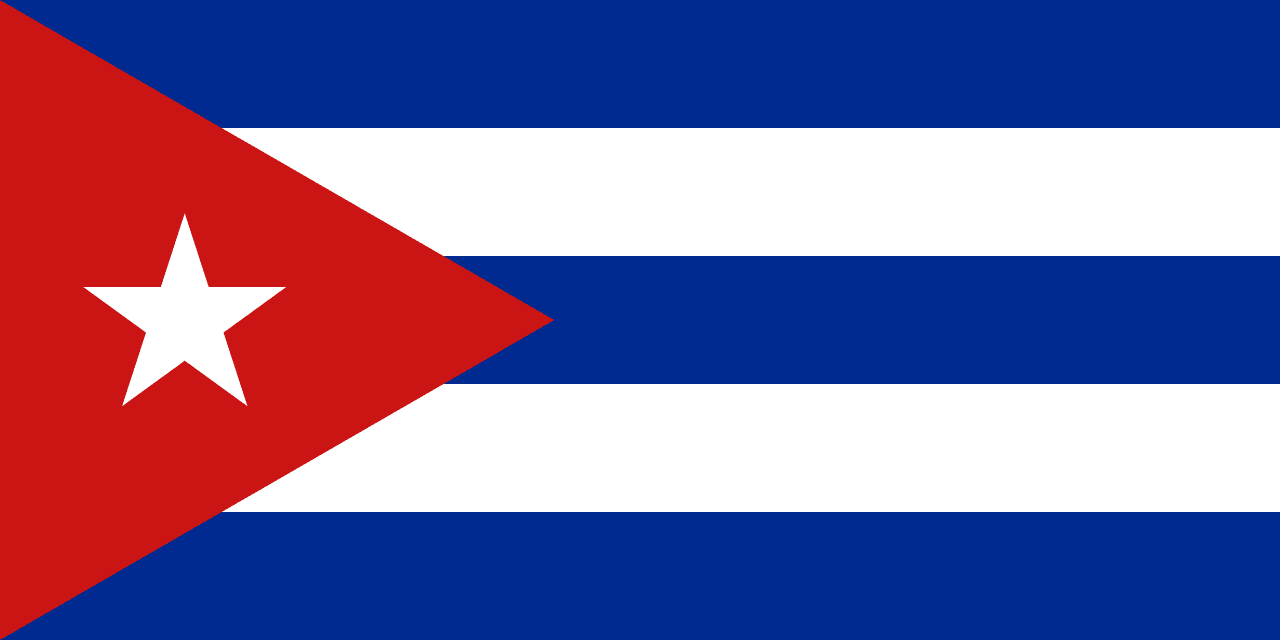
Cuba
North America
Five horizontal stripes alternating blue and white with a red equilateral triangle at the hoist containing a white five-pointed star, representing the three original provinces, purity, the blood of martyrs, and the independence of Cuba.
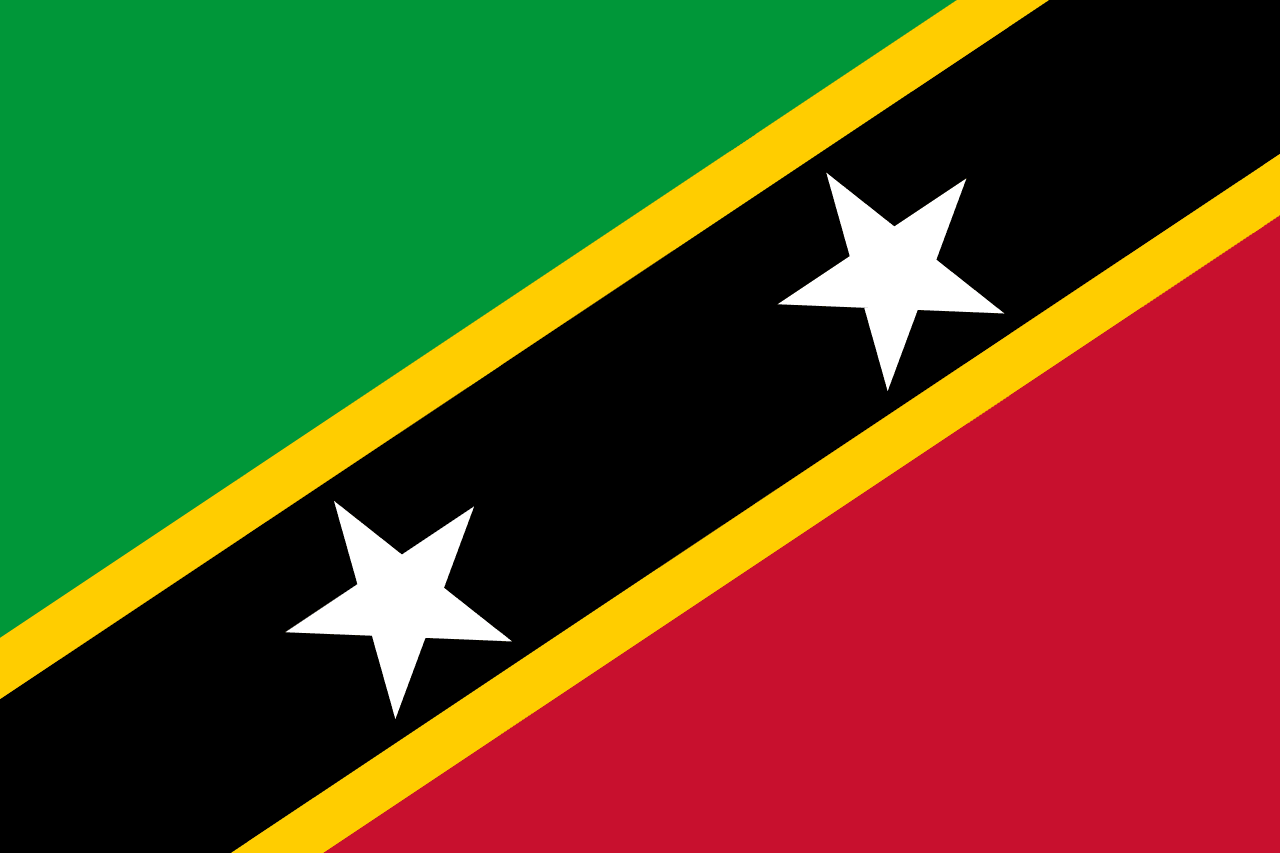
Saint Kitts and Nevis
North America
A diagonal black band edged in yellow divides the flag from lower hoist to upper fly, with green above and red below. Two white stars appear in the black band, representing hope and liberty.
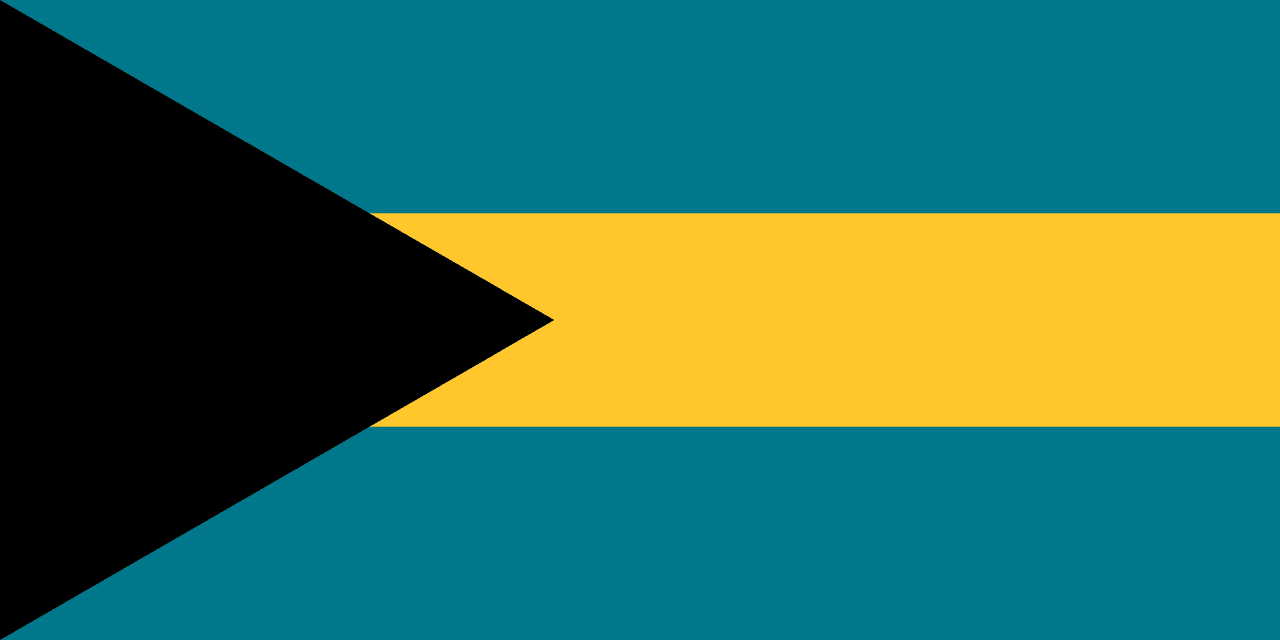
Bahamas
North America
Three horizontal stripes of aquamarine, gold, and aquamarine with a black equilateral triangle at the hoist, representing the waters surrounding the islands, the golden beaches and sunshine, and the strength and determination of the Bahamian people united in their love for their homeland.
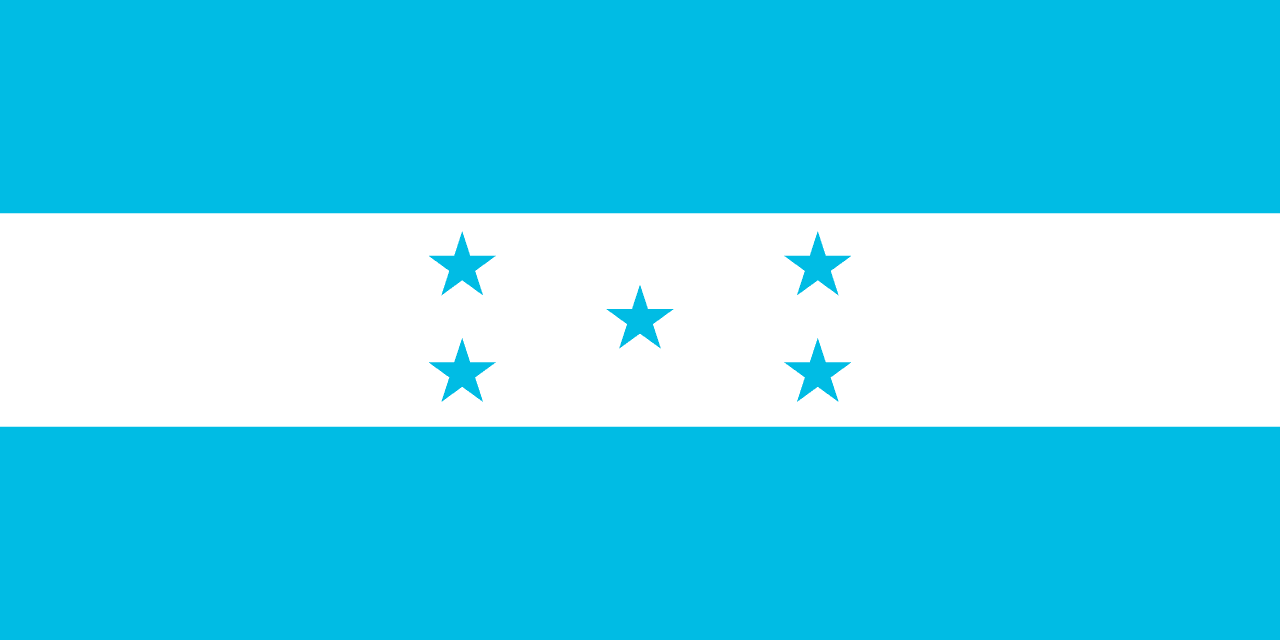
Honduras
North America
Three horizontal stripes of blue, white, and blue with five blue five-pointed stars arranged in an X pattern on the white stripe, representing the Pacific and Atlantic oceans, peace, and the hope for Central American unity.